
Implant-Supported Dentures in Venice, FL
A more stable full smile, supported by dental implants.
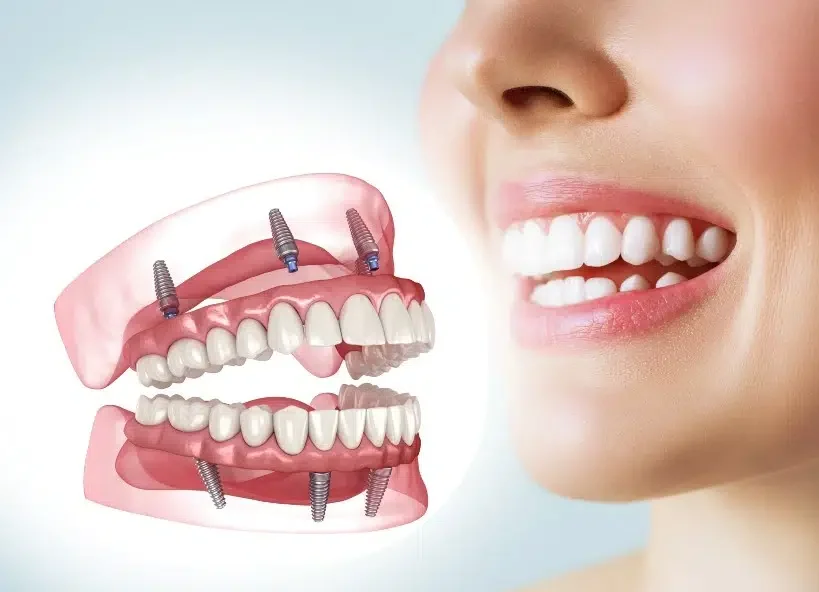
Implant-supported dentures blend the stability of implant technology with the convenience of a denture appliance, helping restore function, appearance and confidence after extensive tooth loss.
What Are Implant-Supported Dentures?
Implant stability meets the convenience of dentures
Tooth loss changes oral function and often physical appearance. Losing multiple teeth or full arches can have an even deeper impact on self-confidence and general well-being.
Traditional dentures may be viable for some patients, but a growing number choose the permanence of implant-supported dentures. These dentures are anchored to the jaw through the strategic placement of two or more dental implants.
If you have multiple broken or missing teeth, a personalized consultation with Dr. Kevin Krause can help determine whether this solution is right for you.
- Improve denture retention without sticky adhesive.
- Support stronger, more confident speaking and chewing.
- Help preserve the underlying jawbone through implant stimulation.
Traditional vs. Implant-Supported
Understand how the two denture approaches differ
Your anatomy, goals, function, cost and preferences all inform the recommendation made during your consultation.

Traditional Dentures
Rest on top of the gums and offer a temporary tooth-replacement approach.
Retention
Traditional dentures may need adhesive, while implants provide secure anchorage in the jaw.
Eating
Traditional dentures can limit dietary choices; implant support provides stable biting and can make favorite foods easier to enjoy.
Bone Support
Implants fuse with the jaw and help preserve underlying bone, while a conventional denture only rests on the gums.
Long-Term Replacement
Traditional dentures are typically replaced every five to seven years. Implant-supported teeth provide a more permanent foundation, although the denture may still need maintenance.
Natural Function
Implant-supported dentures are designed to look, feel and act more like real teeth with solid, stable function.
Implant-Supported Denture Process
Complete implant care in one state-of-the-art practice
Dr. Krause has advanced surgical training and can complete the entire procedure in the Venice office. Guided implant surgery supports exact placement and more predictable results.
3D planning
Digital imaging and CAD camera scans are used to diagnose, virtually design implant positions and create a guided surgical template for accurate, efficient placement.
Implant surgery
Two or more supports are strategically placed, often toward the front of the jaw where more bone and fewer nerves and tissues may be present. Sedation is available for comfort.
Coordinated care
Broken-tooth extractions or bone grafting in areas of bone loss can often be completed during the same visit as implant surgery.
Healing and integration
The implants generally need four to six months to heal and fuse solidly with the jawbone.
Abutments and restoration
After integration, the gums are reopened and final abutments are placed during a two- to three-week phase. These attachments connect to the inside of the custom denture made by the in-house lab.
What Options Do You Have?
From a single tooth to full-arch restoration
Dental Implants Today offers options ranging from single-tooth implants to full-arch restorations. After discussing your dental goals and reviewing your case, Dr. Krause will make suggestions based on your needs for function, cost and personal desires.
Frequently Asked Questions
Implant-supported denture questions answered
Is getting new dentures worth it?
Dentures can wear and stain faster than natural teeth and can become loose as the mouth changes. Poor fit and ongoing adhesive use may contribute to jawbone damage. Implant-supported dentures combine a denture’s gum seal with implant retention, eliminating the need for sticky adhesive.
Do I need special dentures?
Not always. During your complimentary consultation, Dr. Krause provides an accurate, honest diagnosis. If custom implant-supported dentures are unnecessary, the practice will not push you toward them.
How long does a set of dentures last?
Nothing lasts forever. Oral tissue and underlying bone continually change, so dentures may eventually need adjustment, relining or replacement to maintain a good fit.
Why is 3D imaging important?
Precise implant placement matters because vital structures run throughout the head and neck. Modern 3D imaging and CAD scanning allow implants to be diagnosed and virtually planned before treatment, improving safety and enabling an accurate guided surgical template.
How long does the process take?
The complete implant process takes months rather than one appointment. After implants are inserted into prepared sites, bone must accept and fuse with them. Once integrated, the gums are reopened and final abutments that attach inside the denture are placed during a two- to three-week phase.